
Porcelain or Indian Stone Patios in Altrincham Which Is Best for Your Garden?

Choosing a patio material sounds simple until the samples are on the table. Porcelain looks sharp, modern, and low-maintenance. Indian stone has texture, warmth, and character. Both can make a garden feel more useful and more finished, but they suit different homes, budgets, and habits.
For gardens in Altrincham, the choice often comes down to weather, style, upkeep, and how the space will be used. A patio that looks great in a showroom still needs to cope with rain, shade, foot traffic, garden furniture, muddy shoes, barbecue grease, and the odd winter frost.
This guide compares the two options clearly, so you can decide what belongs outside your back door.
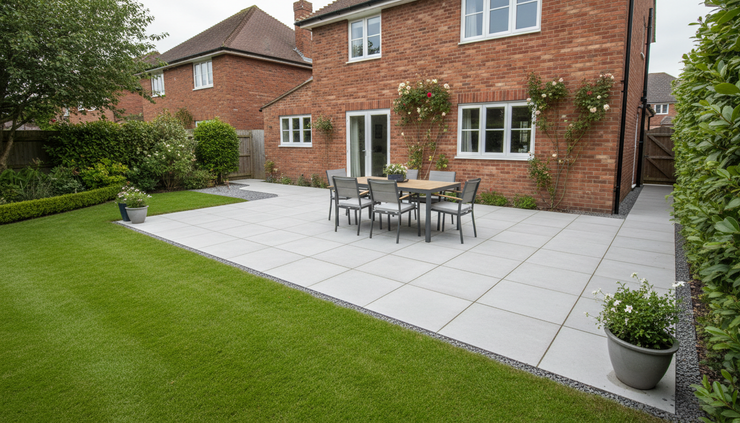
The short answer is that both can work well
Porcelain and Indian stone are both strong choices when installed properly. Neither is “best” for every garden.
Porcelain is usually better if you want a clean, consistent finish with lower maintenance. It suits contemporary extensions, crisp garden layouts, and homeowners who want a patio that resists staining and keeps its color well.
Indian stone is usually better if you want natural variation, softer edges, and a more traditional garden feel. It works beautifully with period homes, cottage-style planting, curved paths, and gardens where texture matters.
So, Which Is Better for Your Garden? The answer depends on how much maintenance you are happy with, the look you prefer, and how the patio will connect with the rest of the property.
What porcelain patios do well
Porcelain paving has become popular because it gives a precise, high-end look without needing constant attention. The slabs are manufactured rather than quarried in the same way as natural stone, so the finish is controlled and predictable.
That makes porcelain a strong option for homeowners who want the patio to look neat from day one and stay that way with basic cleaning.
Porcelain gives a consistent finish
If you choose a light grey porcelain slab, every slab should look close to the sample. That consistency helps when the patio sits beside modern glazing, rendered walls, sharp borders, or new garden rooms.
Porcelain works especially well in:
Modern rear extensions
Minimal garden designs
Outdoor kitchens
Straight-edged patios
Low-maintenance family gardens
Smaller spaces where a clean finish makes the area feel larger
The surface can mimic stone, concrete, or marble, but it usually has a more uniform look than natural paving. For some gardens, that is the whole point.
Porcelain resists stains well
Porcelain is dense and non-porous compared with many natural stones. That means it is less likely to absorb everyday marks from food, drink, soil, leaves, or general garden use.
It still needs cleaning. No outdoor surface stays spotless without care. But porcelain usually needs less effort to keep looking fresh.
A simple routine is often enough:
Brush away leaves and grit
Wash with warm soapy water when needed
Rinse off spills before they dry
Avoid harsh chemicals unless the manufacturer allows them
This makes porcelain popular for busy households, dining areas, and patios that sit under trees.
Porcelain keeps its color well
Because the material is hard and dense, good-quality porcelain usually holds its appearance well over time. It is less likely to fade dramatically than some natural stones and often has strong resistance to frost when installed on the right base.
That last detail matters. The slab is only one part of the patio. The sub-base, falls, joints, and bedding method all play a major role in how the patio performs.
If you are looking at porcelain patios Altrincham, the installation standard matters as much as the slab choice. Poor preparation can spoil even an expensive product.

What Indian stone patios do well
Indian stone, often sold as Indian sandstone or limestone, has a different appeal. It feels natural because it is natural. Each slab has its own tone, pattern, veining, and surface texture.
That variation is the reason many people choose it.
Indian stone has natural character
No two slabs are exactly the same. Some have soft veining. Some have warmer tones. Some show fossil-like markings or layered color. The final patio feels less uniform and more relaxed.
This suits gardens where a manufactured look would feel too sharp.
Indian stone often works well with:
Older Altrincham properties
Brick garden walls
Mature planting
Curved borders
Cottage-style gardens
Traditional lawns and paths
An Indian stone patio Altrincham homeowners choose for character can soften the whole garden. It often feels settled more quickly than porcelain because the tones blend naturally with planting, soil, timber, and brickwork.
Indian stone offers grip and texture
Many Indian stone slabs have a riven surface, which means the surface is gently uneven rather than perfectly flat. This texture can give good grip underfoot, although every product is different and the finish should be checked before buying.
A riven finish also hides small marks better than a very plain surface. In a family garden, that can be useful. Soil, leaves, and everyday scuffs do not always stand out as much as they might on a pale, smooth porcelain slab.
Indian stone can age beautifully
Natural stone changes over time. Some people love that. It can mellow, deepen, and blend into the garden. The patio starts to feel like part of the property rather than a new surface placed on top of it.
That said, the same aging process can frustrate people who want the patio to look almost identical year after year. Indian stone can be more affected by algae, weathering, and staining, especially in shaded or damp corners.
For many gardens, that natural patina is part of the appeal. For others, it feels like extra maintenance.
How they compare on the things that matter
The best way to choose is to compare the materials against real garden use, not just appearance.
Feature | Porcelain paving | Indian stone paving |
Look | Clean, crisp, consistent | Natural, varied, textured |
Best suited to | Modern and low-maintenance gardens | Traditional and characterful gardens |
Stain resistance | Usually very strong | Varies by stone and sealing |
Color consistency | Very consistent | Naturally varied |
Maintenance | Generally lower | Usually needs more care |
Surface feel | Smooth or lightly textured | Often riven and more rustic |
Installation | Needs skill and correct materials | Also needs a solid base and careful laying |
Aging | Keeps a newer look for longer | Develops more natural character over time |
Maintenance is where porcelain often wins
If easy care is the main priority, porcelain has the edge. Its dense surface makes it more resistant to staining and moisture absorption. This is useful in Altrincham gardens where wet weather and shaded corners can encourage algae and grime.
Porcelain still needs attention. Leaves should not sit on it for weeks. Furniture feet can leave marks. Pale colors may show dirt sooner than darker shades. But cleaning is usually straightforward.
Indian stone asks for a little more care. Depending on the type of stone, it may benefit from sealing. It may also need more regular cleaning in damp areas, especially if the surface is riven and catches dirt in the texture.
A practical maintenance plan for Indian stone includes:
Sweeping often during autumn
Cleaning shaded areas before algae builds up
Rinsing soil and spills quickly
Checking whether a suitable breathable sealer is recommended
Repointing joints if they loosen over time
The trade-off is simple. Porcelain tends to stay neater with less effort. Indian stone rewards care with a softer, more natural look.

Installation quality matters more than most people think
A patio is not just the slabs you see. The hidden layers decide whether it drains properly, stays level, and lasts through changing weather.
Porcelain and Indian stone both need proper preparation, but porcelain is less forgiving in some ways. It usually needs a suitable slurry primer, correct bedding, accurate cuts, and careful jointing. The clean lines that make porcelain attractive also make poor workmanship easier to spot.
Indian stone also needs skill. The varied slab thickness, natural edges, and surface texture mean the installer has to judge levels carefully. A badly laid natural stone patio can hold water, rock underfoot, or look uneven in the wrong way.
Good installation should include:
A well-compacted sub-base
Correct falls for drainage
Full mortar bedding, not spot bedding
Suitable jointing material
Clean cuts around edges and features
Thoughtful layout before laying starts
For patio installers Altrincham, refer to Tomlinson's Landscapes if you want advice on how each material would work in your garden. A good installer should look at drainage, access, levels, surrounding walls, and how the patio will be used before recommending a product.
Budget should include more than the paving
It is tempting to compare slab prices only, but that can mislead. The final cost of a patio depends on the whole job.
The price may be shaped by:
Ground preparation
Skip hire and waste removal
Drainage needs
Steps and retaining edges
Cutting around drains or walls
Jointing materials
Access through the property
Size and shape of the patio
Whether old paving needs removing
Porcelain is often seen as the premium option, but not always. Some natural stones can cost more than basic porcelain. Some porcelain slabs are affordable, while others are at the higher end.
Indian stone can offer good value, especially for larger areas, but it should not be chosen only because it looks cheaper at first. If it needs more maintenance, sealing, or extra care over time, that should be part of the decision.
The fairest comparison is a full installed price for both materials on the same design.
Style should connect the patio to the house
A patio should not feel separate from the home. It should connect the doors, garden, planting, and outdoor furniture into one usable space.
Porcelain tends to suit homes with:
Bifold or sliding doors
Rendered walls
Modern kitchens opening to the garden
Simple raised beds
Sleek furniture
Grey, beige, or stone-effect color schemes
Indian stone tends to suit homes with:
Older brickwork
Traditional garden walls
Timber furniture
Mixed planting
Softer lawn edges
Country or cottage-style details
That does not mean you cannot mix styles. A Victorian or Edwardian home can look excellent with porcelain if the garden design is handled carefully. A newer property can also look warmer and more personal with Indian stone.
The key is to choose a material that supports the whole garden, not just the current trend.
Think about shade, trees, and drainage
Altrincham gardens often have a mix of mature trees, boundary shade, and damp periods through the year. These conditions affect the patio more than many people expect.
A shaded patio under trees will need more cleaning whichever material you choose. Leaves, sap, pollen, and damp air all leave marks. Porcelain may clean more easily, while Indian stone may hide some natural debris better because of its varied tones.
Drainage is just as important. Water should move away from the house and should not sit in low spots. This matters for comfort, safety, and long-term performance.
Before choosing the slab, look at the site:
Does the area stay damp after rain?
Is it shaded for most of the day?
Will garden furniture sit there all year?
Do children or pets use the space heavily?
Will pots, planters, or a barbecue sit on the paving?
Does the patio need steps or a level threshold?
These answers often point clearly toward one material.

When porcelain is the better choice
Porcelain is likely the better fit if you want a patio that looks precise, modern, and easy to clean.
Choose porcelain if:
You prefer sharp lines and consistent color
You want a low-maintenance surface
The patio will be used for outdoor dining
You have a modern extension or garden room
You dislike natural weathering and color variation
You want a surface that resists everyday stains well
Porcelain is also a good match for smaller patios where a clean, pale finish can make the space feel brighter and more open.
The main caution is installation. Porcelain needs the right laying system and careful handling. A proper install protects the investment.
When Indian stone is the better choice
Indian stone is likely the better fit if you want warmth, texture, and natural charm.
Choose Indian stone if:
You like varied tones and unique slabs
The home has traditional brick or period features
You want the patio to blend into planting
A slightly rustic finish suits the garden
You do not mind some natural aging
You are happy with a more hands-on care routine
Indian stone can make a garden feel established. It is especially effective where straight, modern porcelain might feel too clinical.
The main caution is maintenance. Natural stone needs sensible cleaning, and some types may need sealing to help resist stains and weathering.
The best choice is the one that fits daily life
A patio should make the garden easier to enjoy. If it creates chores you dislike, the material is wrong for you, even if it looks beautiful in photos.
Pick porcelain if you want smart, clean, and straightforward. Pick Indian stone if you want natural, textured, and characterful.
For Porcelain or Indian Stone Patios in Altrincham, the right answer comes from the property, the garden conditions, and how the space will be used week after week. Look at samples outside, compare them in wet and dry weather, and speak with Tomlinson's Landscapes about the base, drainage, layout, and finish before making the final call.
A well-built patio should feel right the first summer and still make sense years later. That matters more than following a trend.

Comments